
170: Dr. Tamer Ali
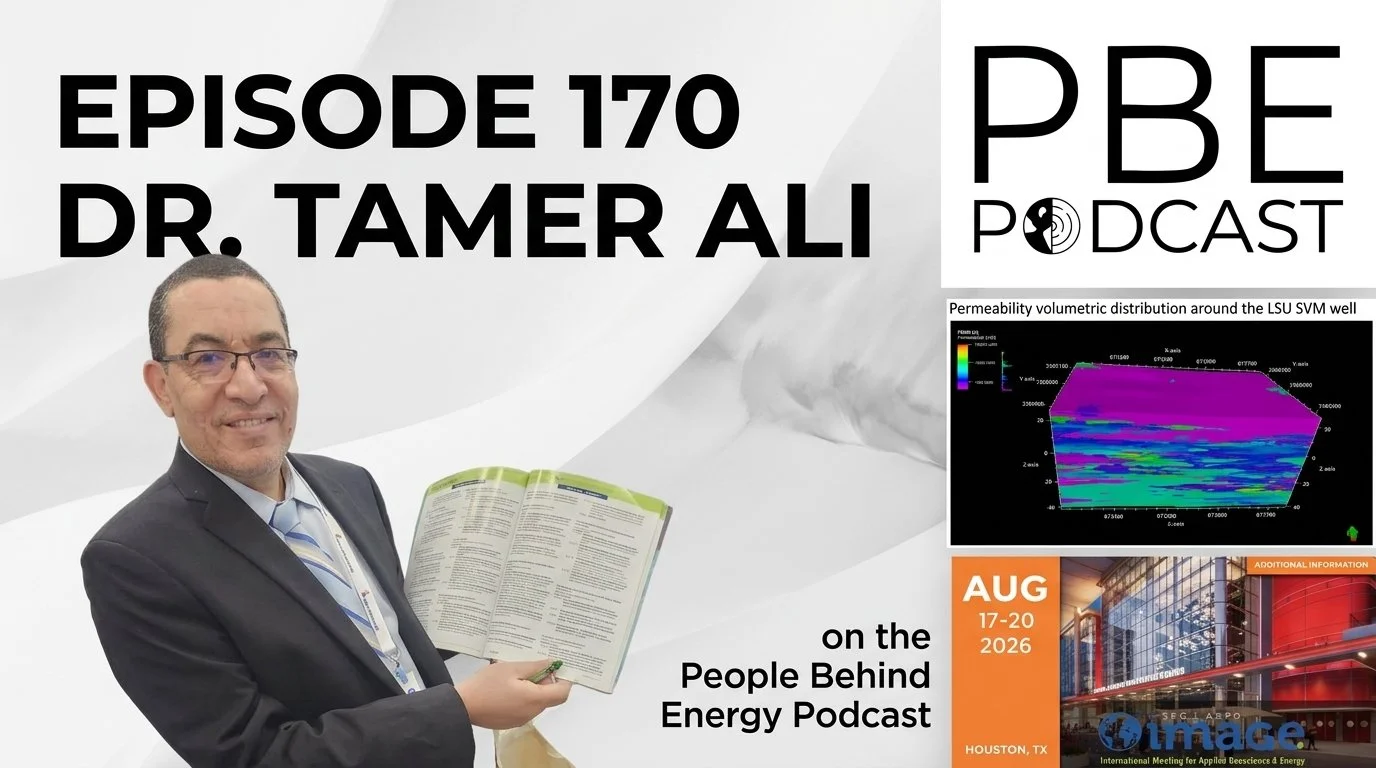
In this episode of the PBE podcast, host Troy Tittlemier sits down with Tamer Ali at IMAGE 2026 to explore the cutting edge of geology, geophysics, and AI integration. Tamer shares his incredible journey from growing up on a farm in the Nile Delta to processing seismic data across six countries, and eventually earning degrees from the Colorado School of Mines and LSU. The conversation dives into Tamer's groundbreaking PhD dissertation, which uses a novel AI hybrid model—combining generalized additive models (GAM) and k-means clustering—to quantitatively integrate geophysical and geological data. By predicting grain size and permeability in shallow, unconsolidated sediments, Tamer's work precisely locates dangerous water seepage beneath structures like the LSU Veterinary School of Medicine. This localized, quantitative approach could save tens of millions of dollars annually in levee restoration and prevent catastrophic infrastructure failures across the Lower Mississippi Valley.
Episode Highlights:
The Elevator Pitch: An introduction to Tamer's extensive academic background and his focus on quantitative data integration using AI.
Roots in the Nile Delta: Tamer discusses his Egyptian heritage, farming background, and how a geologist uncle sparked his early love for earth sciences.
The Industry Grind: Balancing a full-time 3D seismic processing career at WesternGeco with a grueling daily commute to earn a master's degree at Colorado School of Mines.
Quantitative vs. Qualitative: The shift from subjective visual inspections to writing robust Python and R code to build a new hybrid AI model.
The LSU Vet School Project: Securing an AAPG grant and Army Corps permits to investigate uneven stress and water seepage beneath the university building.
K-Means Clustering for Civil Engineering: Applying five distinct data properties to accurately classify subsurface facies from zero to 90 feet.
Saving Millions & Preventing Disasters: How Tamer's precise seepage detection can prevent future tragedies like Hurricane Katrina and save an estimated $50 million a year.
The Future of Petrophysics: Tamer's next chapter pursuing the only specialized petrophysics master's degree in the United States at Texas A&M-Kingsville.