
176: IBA Team from University of Louisiana at Lafayette
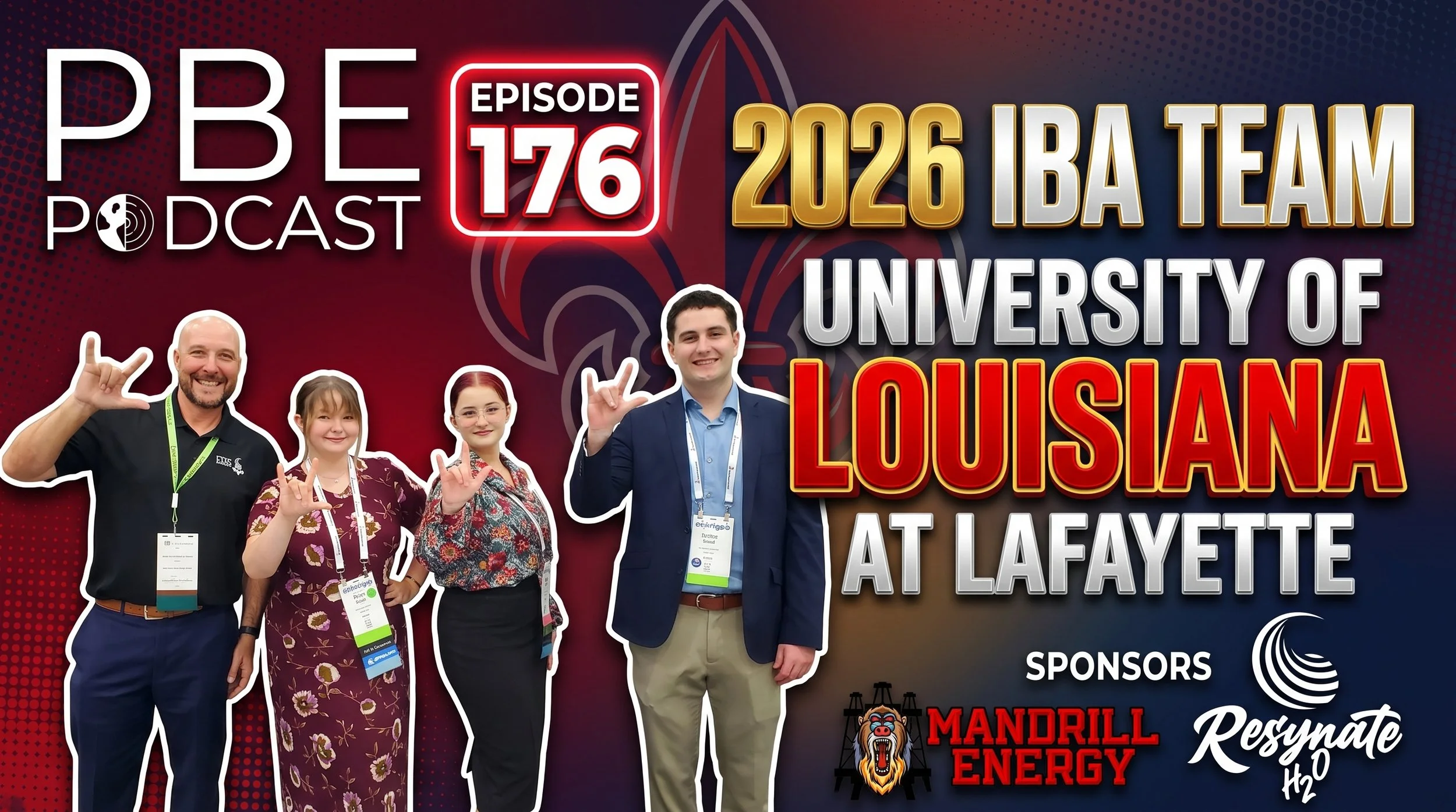
This video features an in-depth conversation with the University of Louisiana at Lafayette (UL) 2026 Imperial Barrel Award (IBA) team members, who placed second in the prestigious international geology competition. The IBA is a long-standing contest organized by the American Association of Petroleum Geologists (AAPG) and the Society of Exploration Geophysicists (SEG), where university teams analyze a real-world oil and gas dataset and present their exploration and development strategy.
The UL team tackled a challenging oil and gas project based on an onshore dataset from the North Holland platform in the Netherlands. The project required mastering complex, decades-old seismic and well-log data, often in multiple languages and formats, including scanned raster logs. Under the mentorship of both academic and industry advisors, they conducted integrated analyses involving tectonics, petrophysics, dry hole assessment, reservoir characterization, and risk evaluation. They crafted a coherent, compelling story about the petroleum system’s maturity, migration, reservoirs, and prospects, presenting it clearly and professionally to international judges.
Beyond the technical aspects, the discussion highlighted the vital role of teamwork, advisor support, and effective communication skills in the IBA process. The team also reflected on how their experience prepared them for diverse geoscience careers, underscoring the importance of applying geological expertise not only to traditional oil and gas but also to emerging sustainability-related challenges like carbon capture and storage. The video captures the excitement, challenges, and camaraderie that define the IBA competition and offers perspectives on the future directions of energy geology.
Highlights
🛢️ UL’s IBA team won second place in the 2026 Imperial Barrel Award competition analyzing an oil and gas project on the North Holland platform, Netherlands.
🗂️ The dataset was complex, comprising old seismic data and scanned well logs in Dutch and French, requiring substantial data processing and interpretation effort.
👩🏫 The team received mentorship from both university faculty and industry professionals, enhancing their technical confidence and presentation skills.
📊 Integrated analyses covered key aspects: tectonic history, source rock maturity, petrophysical evaluation, dry hole analysis, reservoir characterization, and prospect risk assessment.
🏴☠️ The presentation was creatively themed as “pirates” late in the preparation, showing flexibility and team spirit to engage judges memorably.
🔋 Members expressed strong career ambitions in exploration geology, mineral exploration, and interdisciplinary roles bridging drilling, production, and environmental sustainability.
🌍 The discussion framed oil and gas geology as foundational for advancing energy transition technologies such as CCS and geothermal, linking traditional expertise with future demands.